
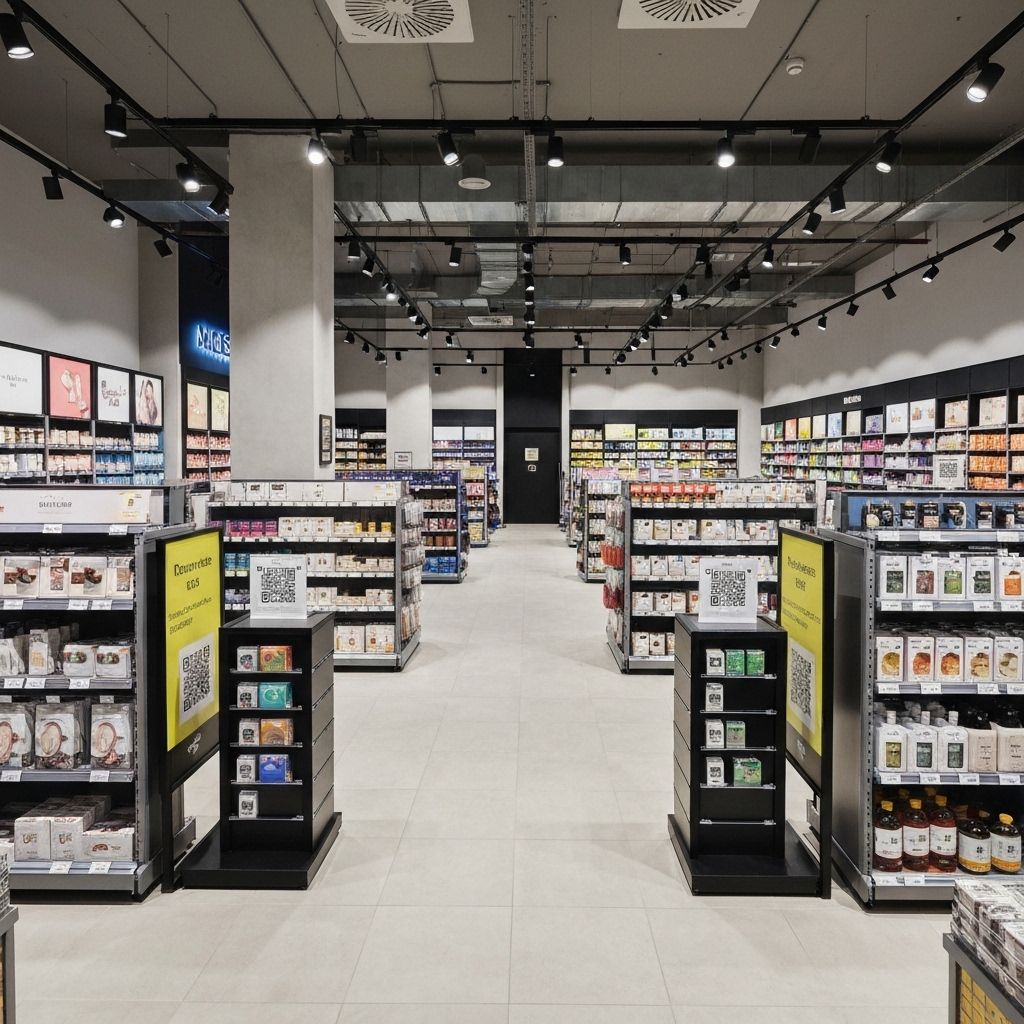
10 Creative Ways to Use QR Codes in Retail
Discover innovative QR code strategies for retail stores. From product information to loyalty programs, learn how to enhance customer experience and boost sales with smart QR code implementations.
The retail landscape is evolving rapidly, and QR codes have emerged as a powerful tool to bridge the gap between physical and digital shopping experiences. Modern consumers expect instant access to information, seamless transactions, and personalized interactions. QR codes deliver all of this and more, transforming how retailers engage with customers and operate their businesses.
In this comprehensive guide, we'll explore 10 creative and effective ways to implement QR codes in your retail store. Whether you're running a boutique clothing store, electronics shop, or large department store, these strategies will help you enhance customer experience, increase sales, and gain valuable insights into shopping behavior.
"Retailers who embrace QR code technology see an average 35% increase in customer engagement and a 28% boost in conversion rates. The key is implementing them strategically across the customer journey."
— National Retail Federation, 2025 Digital Commerce Report
1. Product Information & Specifications
Place QR codes on product displays, price tags, or shelf labels to provide instant access to detailed product information. Customers can scan to view specifications, materials, care instructions, sizing guides, and availability in different colors or sizes.
This approach is particularly effective for:
- Electronics stores showcasing technical specifications
- Furniture retailers displaying dimensions and assembly instructions
- Clothing stores offering detailed fabric composition and care guides
- Beauty products with ingredient lists and usage instructions
"We added QR codes to our electronics displays, and customer satisfaction scores jumped 42%. Shoppers love having instant access to specs, reviews, and comparison data without hunting for a sales associate."
— Sarah Chen, Store Manager, TechHub Electronics
2. Virtual Try-On & Augmented Reality
Implement QR codes that launch augmented reality (AR) experiences, allowing customers to virtually try on products before purchasing. This technology works exceptionally well for eyewear, makeup, furniture, and home decor.
Benefits of AR-enabled QR codes:
- Reduce return rates by helping customers make confident decisions
- Create engaging, shareable experiences that drive social media buzz
- Minimize physical inventory needs for color/style variations
- Collect data on customer preferences and popular combinations
3. Loyalty Program Enrollment
Simplify loyalty program sign-ups with QR codes at checkout counters, on receipts, or throughout the store. Customers can scan to instantly join your rewards program, eliminating paper forms and manual data entry.
Modern loyalty QR codes can:
- Auto-populate customer information from their device
- Instantly issue digital membership cards
- Provide immediate welcome bonuses or first-purchase discounts
- Enable point tracking and reward redemption through mobile
Pro Tip
Place loyalty program QR codes at multiple touchpoints: entrance displays, fitting rooms, checkout counters, and on shopping bags. The more opportunities customers have to join, the higher your enrollment rates.
4. Contactless Payments & Mobile Checkout
Enable scan-and-go shopping experiences where customers scan product QR codes, add items to a digital cart, and complete payment through their mobile device. This eliminates checkout lines and creates a frictionless shopping experience.
Implementation strategies:
- Product-level QR codes for individual item scanning
- Cart-level QR codes for bulk checkout at self-service stations
- Integration with digital wallets and payment apps
- Receipt delivery via email or SMS after mobile payment
5. Customer Reviews & Social Proof
Link QR codes to customer reviews, ratings, and user-generated content. Shoppers can scan to see real customer photos, video reviews, and detailed feedback before making purchase decisions.
This builds trust and confidence by:
- Showcasing authentic customer experiences
- Displaying star ratings and review summaries
- Featuring customer photos showing products in real-life settings
- Encouraging post-purchase review submissions
6. Exclusive Promotions & Limited-Time Offers
Create urgency and drive sales with QR codes that unlock exclusive discounts, flash sales, or limited-time promotions. These can be displayed on window signage, in-store posters, or sent via email campaigns.
Effective promotion strategies:
- Time-sensitive codes that expire after specific periods
- Location-based offers that activate only when scanned in-store
- Tiered discounts based on purchase amount or cart value
- Bundle deals that combine multiple products at special pricing
"Our weekend flash sale QR codes generated $47,000 in additional revenue over a single weekend. The ability to track scans and conversions in real-time let us optimize the campaign on the fly."
— Marcus Rodriguez, Marketing Director, Fashion Forward Boutique
7. Interactive Store Navigation
Help customers find products quickly with QR codes that provide interactive store maps and navigation. Shoppers can scan codes at store entrances or department markers to locate specific items, categories, or services.
Navigation features include:
- Department and category locators
- Product search with aisle and shelf information
- Restroom, fitting room, and service desk directions
- Store event and promotion locations
8. Product Tutorials & How-To Guides
Enhance product value by linking QR codes to video tutorials, assembly instructions, styling guides, and usage tips. This is particularly valuable for complex products or items that benefit from demonstration.
Content ideas:
- Assembly and installation videos for furniture and appliances
- Styling guides for fashion and accessories
- Recipe ideas for kitchen products and ingredients
- Maintenance and care instructions for long-term products
9. Feedback & Customer Surveys
Collect valuable customer insights by placing QR codes on receipts, exit doors, or throughout the store. Customers can quickly share feedback about their shopping experience, product quality, or service interactions.
Survey best practices:
- Keep surveys short (3-5 questions maximum)
- Offer incentives like discount codes for completion
- Ask specific questions about recent interactions
- Follow up on negative feedback within 24 hours
10. Inventory Checks & Stock Alerts
Empower customers to check real-time inventory availability across all store locations. QR codes can link to stock checkers that show which sizes, colors, or variants are available and where they can be found.
Advanced inventory features:
- Real-time stock levels across multiple locations
- Reserve online, pick up in-store (BOPIS) options
- Restock notifications via email or SMS
- Alternative product suggestions when items are out of stock
"The future of retail is phygital - seamlessly blending physical and digital experiences. QR codes are the bridge that makes this possible, creating connected shopping journeys that meet modern consumer expectations."
— Dr. Emily Watson, Retail Innovation Researcher, MIT
Implementation Best Practices
To maximize the effectiveness of your retail QR code strategy, follow these proven best practices:
Design & Placement
- Size matters: Minimum 2x2 cm for close-range scanning, larger for distance viewing
- High contrast: Dark codes on light backgrounds for optimal scanning
- Strategic placement: Eye level, well-lit areas with clear call-to-action text
- Brand integration: Customize codes with your logo and brand colors
Technical Considerations
- Dynamic QR codes: Use editable codes that can be updated without reprinting
- Mobile optimization: Ensure landing pages load quickly and display perfectly on mobile
- Analytics tracking: Monitor scan rates, conversion rates, and user behavior
- Error correction: Use high error correction levels to ensure reliability
Customer Experience
- Clear instructions: Add "Scan to..." text explaining what happens
- Value proposition: Communicate the benefit of scanning
- Fast loading: Optimize content for instant access
- Privacy respect: Be transparent about data collection
Measuring Success
Track these key performance indicators to evaluate your QR code campaigns:
- Scan rate: Percentage of customers who scan codes
- Conversion rate: Scans that result in purchases or desired actions
- Time patterns: Peak scanning times and days
- Location performance: Which store areas generate most scans
- Customer demographics: Age groups and segments most engaged
- ROI: Revenue generated versus implementation costs
Common Mistakes to Avoid
- • Using static QR codes that can't be updated or tracked
- • Linking to non-mobile-optimized pages
- • Placing codes in poorly lit or hard-to-reach locations
- • Not testing codes before deployment
- • Overcomplicating the scanning process
- • Failing to provide clear value propositions
The Future of Retail QR Codes
As technology evolves, QR codes in retail will become even more sophisticated:
- AI-powered personalization: Codes that adapt content based on customer history
- Voice-activated scanning: Integration with smart assistants
- Blockchain verification: Product authenticity and supply chain transparency
- Predictive analytics: Anticipating customer needs based on scan patterns
- Seamless omnichannel: Unified experiences across physical and digital touchpoints
Getting Started with TapX
Ready to implement these creative QR code strategies in your retail store? TapX provides the complete platform you need:
- Dynamic QR codes that can be updated anytime
- Comprehensive analytics dashboard with real-time insights
- Custom branding and design options
- Bulk code generation for large inventories
- Integration with existing POS and inventory systems
- Dedicated support team for retail implementations
Start with a pilot program in one department or product category, measure results, and scale what works. The retailers seeing the biggest success are those who test multiple use cases and continuously optimize based on customer behavior and feedback.
Frequently Asked Questions
What are the most effective ways to use QR codes in retail stores?
The most effective uses include product information access, virtual try-on experiences, loyalty program enrollment, contactless payments, customer feedback collection, and personalized promotions. These applications enhance customer experience while providing valuable data insights.
How can QR codes improve the in-store shopping experience?
QR codes improve shopping by providing instant access to product details, reviews, sizing guides, and availability information. They enable self-service options, reduce wait times, and create interactive experiences that bridge physical and digital shopping.
What metrics should retailers track for QR code campaigns?
Key metrics include scan rates, conversion rates, time of day patterns, location-based performance, customer demographics, and post-scan actions. Track which products or promotions generate the most engagement and measure ROI through sales attribution.
How do I create QR codes for my retail store?
Use a professional QR code platform like TapX that offers dynamic QR codes, analytics, and customization options. Ensure codes are properly sized (minimum 2x2 cm), have sufficient contrast, and link to mobile-optimized content. Test codes before deployment.
Can QR codes help with inventory management?
Yes, QR codes can streamline inventory by enabling quick product lookups, stock checks, and reordering. Staff can scan codes to access real-time inventory data, product specifications, and supplier information, improving operational efficiency.
What size should retail QR codes be?
Minimum 2x2 cm (0.8x0.8 inches) for close-range scanning. For window displays or signage viewed from distance, scale up proportionally - typically 10x10 cm or larger. Always test scanning distance before finalizing placement.
How can QR codes reduce checkout lines?
Implement scan-and-go shopping where customers scan product QR codes with their phones, add items to a digital cart, and pay through the app. This eliminates traditional checkout lines and creates a seamless shopping experience.
Are QR codes effective for retail promotions?
Extremely effective. QR codes enable instant coupon redemption, exclusive offers, and personalized promotions. They provide measurable results, reduce printing costs, and allow real-time campaign adjustments based on performance data.
Related Products
Tap Cards
Smart NFC business cards for retail staff and brand ambassadors
Name Plates
Professional NFC name plates for store displays and counters
GeoQR
Location-based QR codes for multi-store retail chains
Related Solutions
Retail Solutions
Complete QR code and NFC solutions for retail stores
E-commerce Integration
Bridge online and offline shopping experiences
Corporate Solutions
Enterprise-grade QR code management for retail chains
Related Use Cases
Marketing Campaigns
Drive engagement with QR code marketing strategies
Loyalty Programs
Build customer loyalty with digital rewards
Customer Reviews
Collect and showcase authentic customer feedback
About the Authors



TapX Team
Our team of professionals, consultants, software engineers, AI engineers, and data scientists work together to improve individuals and businesses across Pakistan. We combine technical expertise with deep industry knowledge to deliver practical solutions that drive real results.