
How to Master Digital & Physical TouchPoints Strategy
In today's omnichannel world, customers expect seamless experiences across all touchpoints. Whether they're browsing your website, visiting your store, or scanning a QR code on your product packaging, every interaction should feel connected and consistent. This comprehensive guide will show you how to master the integration of digital and physical touchpoints to create exceptional customer experiences.
Understanding Touchpoints in the Modern Customer Journey
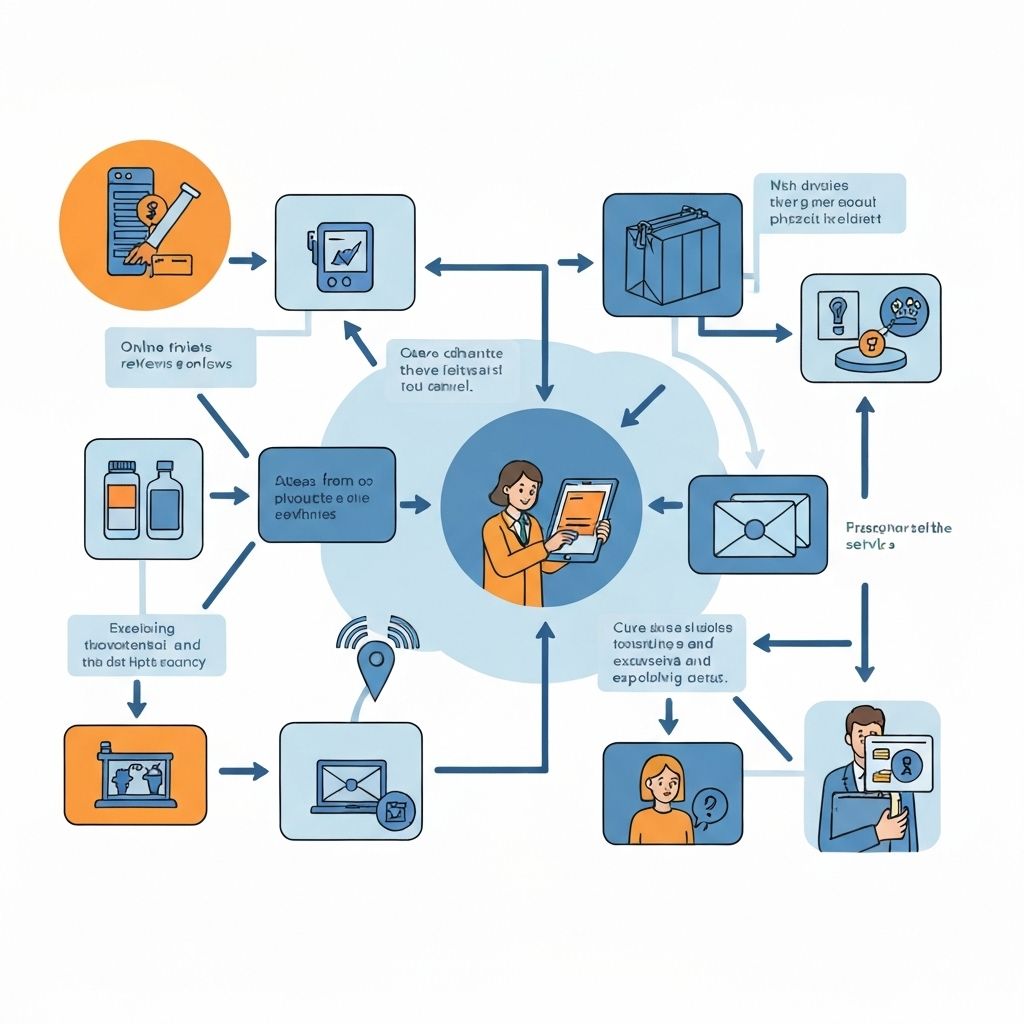
A touchpoint is any interaction a customer has with your brand, whether online or offline. Digital touchpoints include your website, mobile app, social media, emails, and online ads. Physical touchpoints encompass your retail stores, product packaging, business cards, signage, and printed materials.
The key to success is understanding that these touchpoints don't exist in isolation. Modern customers move fluidly between digital and physical channels, often using multiple touchpoints in a single transaction. They might research a product online, visit your store to see it in person, scan a QR code for more information, and then complete the purchase on their mobile device.
"Companies that successfully integrate their digital and physical touchpoints see a 23% increase in customer engagement and a 35% boost in conversion rates. The future belongs to brands that can create seamless omnichannel experiences."
— Dr. Sarah Chen, Customer Experience Researcher at MIT
The Five Pillars of Touchpoint Integration
1. Consistent Brand Experience
Your brand should look, feel, and sound the same across all touchpoints. This means consistent visual identity, messaging, tone of voice, and values. When a customer scans a QR code on your product packaging, the digital experience they land on should feel like a natural extension of the physical product they're holding.
- Use the same color palette, fonts, and design elements across all channels
- Maintain consistent messaging and brand voice
- Ensure your digital interfaces reflect your physical brand identity
- Create brand guidelines that cover both digital and physical applications
2. Seamless Data Integration
Data is the glue that holds your touchpoint strategy together. When a customer interacts with any touchpoint, that data should be captured, integrated, and made available across all other touchpoints. This enables personalized experiences and informed decision-making.
- Implement a unified customer data platform (CDP)
- Track customer interactions across all touchpoints
- Use QR codes and NFC tags to bridge physical and digital data
- Enable real-time data synchronization across systems
3. Mobile-First Approach
Mobile devices are the ultimate bridge between digital and physical worlds. Customers use their phones to scan QR codes, tap NFC tags, look up information, compare prices, and make purchases. Your touchpoint strategy must be optimized for mobile.
- Ensure all digital touchpoints are mobile-responsive
- Optimize loading speeds for mobile networks
- Design for one-handed use and thumb-friendly navigation
- Implement mobile payment options at physical touchpoints
4. Strategic Use of Bridge Technologies
QR codes and NFC technology are powerful tools for connecting physical and digital touchpoints. They allow customers to instantly access digital content from physical objects, creating seamless transitions between channels.
- Place QR codes on products, packaging, signage, and marketing materials
- Use NFC tags for premium products and high-value interactions
- Link to relevant, contextual content (not just your homepage)
- Track scans and taps to measure engagement and optimize placement
5. Continuous Optimization
Your touchpoint strategy should evolve based on customer behavior and feedback. Regularly analyze data, test new approaches, and refine your strategy to improve the customer experience.
- Monitor key metrics across all touchpoints
- Conduct regular customer journey audits
- A/B test different approaches and implementations
- Gather and act on customer feedback
Common Pitfall to Avoid
Don't treat digital and physical touchpoints as separate channels. The biggest mistake brands make is creating siloed experiences where digital and physical teams don't communicate. This leads to inconsistent messaging, disconnected data, and frustrated customers. Always think omnichannel, not multichannel.
Implementing Your Touchpoint Strategy: A Step-by-Step Guide
Step 1: Map Your Current Customer Journey
Start by documenting every touchpoint a customer might encounter when interacting with your brand. Include both digital and physical touchpoints, and map out the typical paths customers take through these touchpoints.
- List all existing touchpoints (website, store, packaging, social media, etc.)
- Identify the sequence in which customers typically encounter these touchpoints
- Note pain points, gaps, and opportunities for improvement
- Gather data on how customers actually move between touchpoints
Step 2: Identify Integration Opportunities
Look for places where you can create bridges between digital and physical touchpoints. These are opportunities to enhance the customer experience and gather valuable data.
- Product packaging → Digital product information, reviews, tutorials
- In-store signage → Online inventory, product comparisons, exclusive offers
- Business cards → Digital portfolios, contact information, social profiles
- Print ads → Landing pages, video content, interactive experiences
- Event materials → Registration, networking, follow-up content
Step 3: Choose Your Bridge Technologies
Select the right technologies to connect your touchpoints. QR codes and NFC are the most common, but consider other options like augmented reality, beacons, and voice assistants.
QR Codes vs. NFC: When to Use Each
Use QR Codes When:
- Budget is limited
- You need wide compatibility
- Touchpoint is visible from a distance
- You want to update content frequently
- Target audience is broad
Use NFC When:
- Premium brand positioning
- Close-proximity interactions
- Security is important
- Seamless experience is critical
- Target audience is tech-savvy
Step 4: Implement and Test
Start with a pilot program to test your touchpoint integration strategy. Choose a specific product line, store location, or campaign to implement your strategy on a smaller scale before rolling it out company-wide.
- Set clear goals and KPIs for your pilot program
- Implement tracking and analytics from day one
- Train staff on the new touchpoint strategy
- Gather feedback from customers and employees
- Monitor performance and make adjustments
Step 5: Scale and Optimize
Once your pilot program proves successful, scale it across your organization. Continue to monitor performance, gather feedback, and optimize your approach based on data and customer behavior.
"We implemented TapX's touchpoint integration strategy across our retail chain and saw immediate results. Customers love being able to scan products in-store to access reviews, styling tips, and inventory at other locations. Our conversion rate increased by 42% and customer satisfaction scores jumped 28 points. The seamless connection between our physical stores and digital platforms has transformed our business."
— Michael Rodriguez, VP of Retail Operations at Fashion Forward
Measuring Success: Key Metrics for Touchpoint Integration
To understand if your touchpoint strategy is working, you need to track the right metrics. Here are the most important KPIs to monitor:
Essential Touchpoint Metrics
Engagement Rate
Percentage of customers who interact with your touchpoints (scan QR codes, tap NFC tags, etc.)
Cross-Channel Conversion Rate
Percentage of customers who complete a desired action after moving between touchpoints
Customer Journey Completion Rate
Percentage of customers who successfully complete their intended journey across multiple touchpoints
Touchpoint Attribution
Understanding which touchpoints contribute most to conversions and customer satisfaction
Customer Satisfaction Score (CSAT)
Overall satisfaction with the omnichannel experience
Return on Investment (ROI)
Revenue generated vs. cost of implementing and maintaining touchpoint integration
Advanced Strategies for Touchpoint Mastery
Personalization Across Touchpoints
Use data from all touchpoints to create personalized experiences. When a customer scans a QR code, show them content based on their previous interactions, preferences, and purchase history.
Predictive Touchpoint Optimization
Use AI and machine learning to predict which touchpoints a customer is likely to use next and optimize those experiences accordingly. This proactive approach can significantly improve conversion rates.
Contextual Content Delivery
Deliver different content based on the context of the touchpoint interaction. A customer scanning a QR code in-store should see different content than someone scanning the same code at home.
Feedback Loop Integration
Create mechanisms for customers to provide feedback at any touchpoint, and use that feedback to improve all other touchpoints. This creates a continuous improvement cycle.
Frequently Asked Questions
What are digital and physical touchpoints?
Digital touchpoints are online interactions like websites, apps, emails, and social media. Physical touchpoints are offline interactions like stores, products, packaging, and printed materials. Both are crucial for creating a complete customer experience.
Why is integrating digital and physical touchpoints important?
Integration creates a seamless omnichannel experience, increases customer engagement by 23%, improves brand consistency, provides better data insights, and can increase conversion rates by up to 35%.
How do NFC and QR codes bridge digital and physical touchpoints?
NFC and QR codes act as bridges by allowing customers to instantly access digital content from physical objects. A simple tap or scan connects the physical world to digital experiences like product information, reviews, videos, or exclusive offers.
What is customer journey mapping?
Customer journey mapping is the process of visualizing every interaction a customer has with your brand across all touchpoints. It helps identify gaps, opportunities, and areas where digital and physical experiences can be better integrated.
How can I measure the success of my touchpoint strategy?
Track metrics like engagement rates, conversion rates, customer satisfaction scores, touchpoint attribution, cross-channel behavior, and ROI. Use analytics tools to monitor how customers move between digital and physical touchpoints.
What are common mistakes in touchpoint integration?
Common mistakes include inconsistent branding across channels, poor mobile optimization, lack of data integration, ignoring customer feedback, and treating digital and physical channels as separate entities instead of a unified experience.
How much does it cost to implement a touchpoint strategy?
Costs vary widely depending on scale. Basic implementation with QR codes can start at Rs. 140,000-560,000. Mid-level strategies with NFC and analytics cost Rs. 1,400,000-5,600,000. Enterprise solutions with full integration can range from Rs. 14,000,000-56,000,000+.
What industries benefit most from touchpoint integration?
All industries benefit, but retail, hospitality, healthcare, real estate, and events see the highest ROI. Any business with both physical presence and digital channels can significantly improve customer experience through touchpoint integration.
Related Products
Tap Cards
Smart business cards with NFC technology
GolTap
Premium NFC tags for products and packaging
Name Plates
Professional NFC-enabled name plates
Related Solutions
Retail Solutions
Omnichannel experiences for retail stores
Hospitality Solutions
Seamless guest experiences across touchpoints
Corporate Solutions
Enterprise touchpoint integration
Related Use Cases
Marketing Campaigns
Bridge print and digital marketing
Event Management
Connect physical events with digital experiences
Loyalty Programs
Integrate rewards across all touchpoints
About the Authors



TapX Team
Our team of professionals, consultants, software engineers, AI engineers, and data scientists work together to improve individuals and businesses across Pakistan. We combine technical expertise with deep industry knowledge to deliver practical solutions that drive real results.